
What is inquiry learning?
And why is it so contentious?

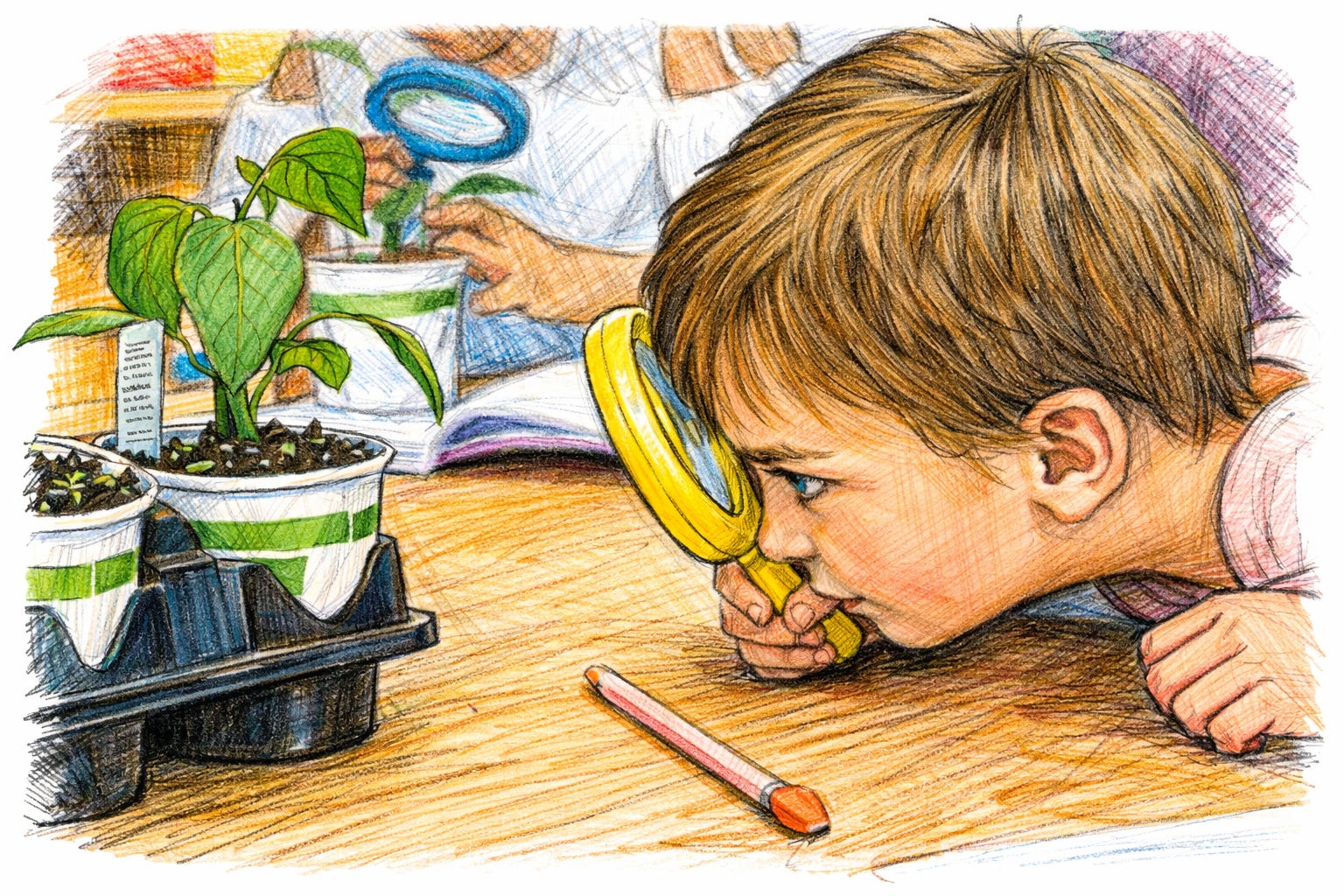
Inquiry learning is one of those phrases that seems to trigger strong reactions even without being clearly defined. For some, it conjures images of students left to discover knowledge without guidance, a kind of pedagogical free-for-all where teachers step back and hope students’ curiosity does the heavy lifting.
For others, it represents the moral heart of education: a commitment to questioning, dialogue and intellectual agency. The truth, as usual, is less dramatic and far more interesting.
Inquiry learning is not the absence of teaching. It is a structured approach to learning in which questions, reasoning and evidence become the organising principles of classroom activity.
At its core, inquiry learning positions students as participants in knowledge-building rather than passive recipients of information. It is not an alternative to guided teaching; it is a way of organising teaching around reasoning.
Why the angst?
Why, then, does inquiry learning attract so many misconceptions? One reason is rhetorical. In contemporary debates about pedagogy, inquiry is often caricatured as unstructured discovery learning. This framing sets up a false dichotomy. Effective classrooms rarely operate at either extreme. Teachers routinely combine explanation, modelling and guided exploration.
Sure, teachers model and students practice, but they should also be invited to do something intellectually meaningful with what they are learning.
Another misconception is that inquiry learning privileges already advantaged students with strong cultural capital or prior knowledge. This concern deserves to be taken seriously. Inquiry without structure can indeed widen gaps, especially if tasks rely on implicit expectations that only some students recognise.

However, research suggests that structured inquiry, when paired with explicit scaffolding and dialogic teaching, can support conceptual understanding across diverse learners.
Studies demonstrate that engaging students in argumentation and epistemic dialogue fosters metacognitive awareness and reasoning skills that transfer beyond specific content domains.
Similarly, dialogic classroom talk in which ideas are jointly examined and challenged in the classroom can enhance both attainment and equity when norms of reasoning are explicitly taught.
Inquiry and dialogue
The link between inquiry learning and dialogue is not incidental; it is foundational. Inquiry is, fundamentally, a social practice. Questions are posed, claims are tested, evidence is weighed, and meanings are negotiated through language. Dialogue transforms inquiry from a solitary search into a collaborative process of sense-making.
Well-structured dialogue can deepen understanding by encouraging students to justify claims, respond to alternative perspectives and refine their thinking. In this view, the teacher’s role shifts from information-deliverer to intellectual conductor. Someone who orchestrates exchanges that keep reasoning sharp, focussed and visible.

This emphasis on dialogue also clarifies a common misunderstanding: inquiry learning is not synonymous with student choice or open-ended projects. Students do not simply wander through topics guided by interest alone. Instead, inquiry involves purposeful questioning within disciplinary frameworks.
In philosophy classrooms, for example, inquiry might involve analysing an argument, testing its validity and considering counterexamples. In science, it might involve designing an investigation guided by conceptual models. The key feature is not freedom from structure but engagement with epistemic practices, or the ways of knowing that define a discipline.
Critics sometimes argue that inquiry learning undermines clarity by replacing direct explanation with vague discussion. Yet this criticism often overlooks how dialogue can enhance clarity.
When students articulate reasoning publicly, misconceptions surface and can be addressed directly. Dialogue creates opportunities for formative assessment in real time, allowing teachers to intervene with targeted explanations.
There is also a broader educational rationale for inquiry learning. Contemporary societies demand not only knowledge acquisition but the capacity to evaluate claims, navigate disagreement and participate in democratic discourse. Inquiry is the means of production of knowledge. It should be a central focus.
Students learn that knowledge is not simply (only) delivered from authority but constructed through justification and critique. This does not diminish expertise; rather, it highlights the standards that make expertise trustworthy.
How to use inquiry learning
Of course, inquiry learning is not a pedagogical panacea. Poorly designed inquiry tasks can lead to confusion or superficial engagement. Without clear learning intentions (understood by the teacher), dialogue can drift into unproductive chatter.
Teachers require professional knowledge to balance guidance and autonomy, to know when to step in with explicit explanation and when to allow students to wrestle with ideas. The success of inquiry depends on cultivating a culture of reasoning: norms that value curiosity, open-mindedness and intellectual humility.
One of the most productive ways to understand inquiry is to see it as part of a continuum rather than a binary choice. On one end lies direct explanation with minimal student interaction; on the other, unguided discovery. Depending upon the cohort, most effective teaching sits somewhere in between, integrating modelling, questioning and dialogue.
So what is inquiry learning? It is a pedagogy that treats learning as an active, dialogic process grounded in questions and evidence. It challenges the idea that knowledge alone is sufficient, emphasising instead the practices of reasoning that make knowledge meaningful.
Far from being an indulgent or elitist approach, structured inquiry has strong theoretical and empirical foundations. It invites students into the intellectual life of a discipline, not as spectators but as participants.
Inquiry learning as a continuum is a great way of looking at it. I honestly cannot teach without using some sort of inquiry (although I’ve been a Montessori teacher for many years & don’t usually use the term ‘inquiry’ it’s just part of independent follow up work). Students get bored senseless with long days of being explicitly instructed. I just wrote an article connected with this if you’re interested.
Such a great explanation. So many truly misunderstand the practice of inquiry learning.